TheraTex TheraTex Research Sensing Hardware
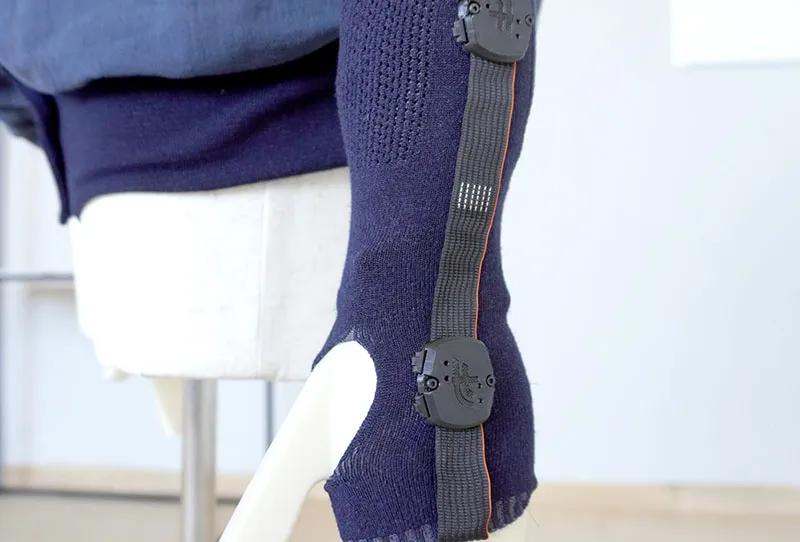
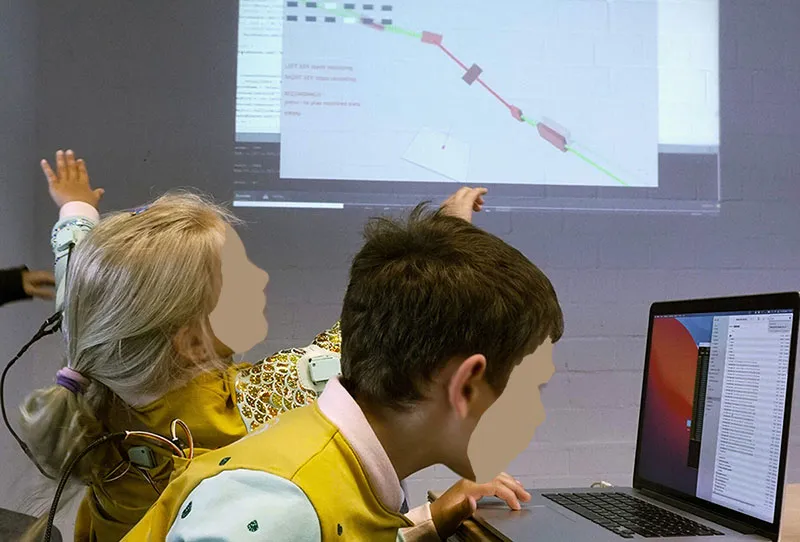
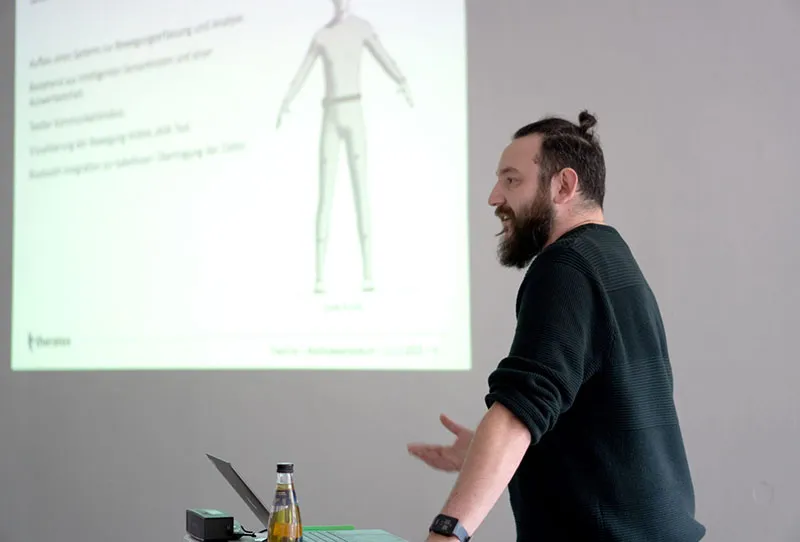
TheraTex ist ein gemeinsames Forschungsprojekt (2019–2022) der TU Berlin, der Charité und mehrerer Industriepartner, gefördert durch das Bundesministerium für Bildung und Forschung (BMBF). Im Mittelpunkt steht die Frage, wie textile Sensorik die alltägliche Rehabilitation von Menschen mit Hemiparese unterstützen kann.
Ziel des Projekts ist eine tragbare Sensorplattform, bei der Bewegungssensorik direkt in Kleidungsstücke integriert wird. Dadurch sollen Patient:innen therapeutische Bewegungen eigenständig zu Hause üben können — begleitet von sofortigem, gut verständlichem Feedback.
Das System kombiniert textilintegrierte Sensorknoten mit Inertialsensorik (Beschleunigung, Gyroskop, Magnetometer). Die Module erfassen Armbewegungen und übertragen die Daten in eine Echtzeit-Anwendung (Processing/Java), die ein 3D-Skelett darstellt, Bewegungsqualität visualisiert und aufgabenspezifische Hinweise gibt. Die Oberfläche ist so gestaltet, dass sie für Patient:innen intuitiv bleibt und gleichzeitig therapeutisch relevante Informationen vermittelt.
Meine Rolle: Hardware- und Firmwareentwicklung der textilen Sensorknoten, Integration der Datenpipeline sowie Gestaltung und Programmierung der Echtzeit-3D-Visualisierung — von der Elektronik über die Kommunikationsarchitektur bis zur Softwareoberfläche für klares, zuverlässiges Bewegungsfeedback.
⚙ Textile Wearable Modules
◉ IMU-System (Acc, Gyro, Magnetometer)
⍦ Firmware & Datenpipeline
▣ Echtzeit-3D-Skelettvisualisierung (Processing/Java)
∿ Motion-Feedback & Bewegungscues
✹ Usability-orientierte Rehabilitation
✉ BMBF-Forschungsprojekt
TheraTex is a collaborative research project (2019–2022) between TU Berlin, Charité and several industry partners, funded by the German Federal Ministry of Education and Research (BMBF). The project explores how textile-integrated sensing can support everyday rehabilitation for people with hemiparesis.
Its aim is to develop a wearable sensing platform that embeds motion-tracking modules directly into garments, enabling patients to practice therapeutic movements independently at home while receiving immediate, comprehensible feedback.
The system combines textile-integrated sensor nodes with inertial measurement units (accelerometer, gyroscope, magnetometer). These modules track upper-limb motion and stream data into a real-time Processing/Java application. The software visualizes a 3D skeleton, highlights movement quality, and provides task-specific cues designed to be understandable for patients while remaining meaningful for therapists.
My role: I developed the hardware and firmware of the textile sensing modules, integrated the real-time data pipeline, and designed and implemented the 3D visualization system — from electronic sensor nodes and communication architecture to a software interface capable of rendering clear and reliable motion feedback for rehabilitation use.
⚙ Textile wearable sensor modules
◉ IMU system (Acc, Gyro, Magnetometer)
⍦ Firmware & data pipeline integration
▣ Real-time 3D skeleton visualization (Processing/Java)
∿ Motion feedback & task-specific cues
✹ Usability-focused rehabilitation support
✉ BMBF-funded research project
Textile Prototyping Lab Textile Prototyping Lab Toolkit E-Textiles Prototyping
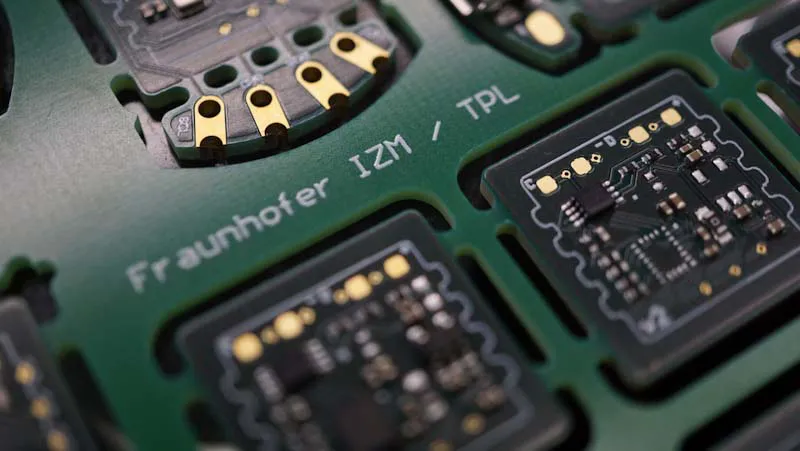
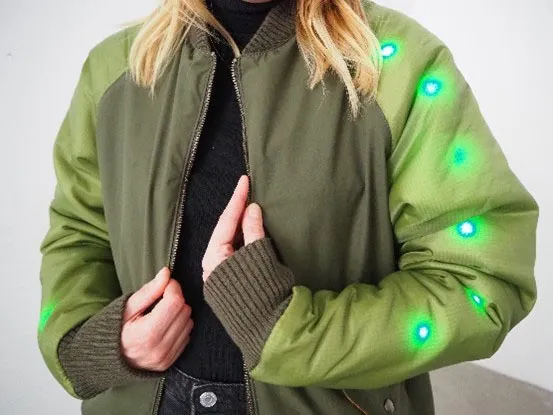
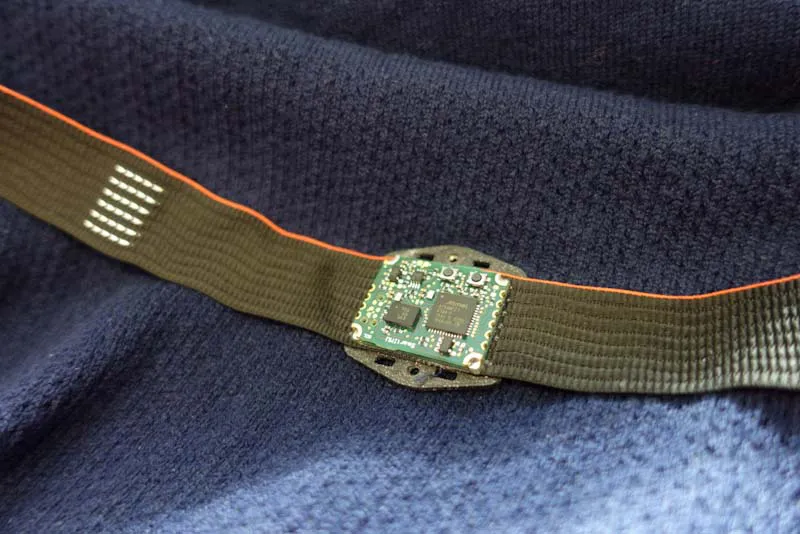
Textile Prototyping Lab (TPL) ist ein offenes Labor für High-Tech-Textilien und textilintegrierte Elektronik. In einem interdisziplinären Team aus Textiltechnik, Elektronikforschung und Design werden hier Werkzeuge, Prozesse und Beispiele entwickelt, mit denen sich E-Textiles schneller und zugänglicher prototypen lassen.
Das Lab verbindet klassische Textiltechniken mit Elektronik-Labor, Sensorik und Software. Designer:innen und Entwickler:innen können gemeinsam an Prototypen arbeiten – von frühen Materialstudien bis hin zu funktionsfähigen Demonstratoren, die an Industrie- und Forschungspartner:innen vermittelt werden.
Meine Rolle: Mitarbeit im Elektronik- und E-Textiles-Team: Entwicklung modularer Hardware-Bausteine für einen E-Textiles-Baukasten, Unterstützung bei der Integration von Sensorik und Elektronik in textile Träger sowie Aufbau von Beispielanwendungen und Dokumentation für Workshops und Lab-Nutzungen.
⚙ Prototyping-Infrastruktur für E-Textiles
◉ Modulare Sensor- & Aktor-Bausteine
⍦ Schnellere Wege von Idee zu Prototyp
▣ Integration von Elektronik & Textil
∿ Interdisziplinäre Zusammenarbeit
✹ Anwendungsnahe Demonstratoren & Workshops
Textile Prototyping Lab (TPL) is an open lab for high-tech textiles and textile-integrated electronics. An interdisciplinary team from textile engineering, electronics research and design develops tools, processes and sample applications that make prototyping e-textiles faster and more accessible.
The lab combines conventional textile techniques with electronics lab infrastructure, sensing and software. Designers and engineers can work side by side on prototypes – from early material explorations to functional demonstrators that can be shared with industry and research partners.
My role: Part of the electronics and e-textiles team, focusing on modular hardware building blocks for an e-textiles toolkit, supporting the integration of sensing and electronics into textile substrates and building example applications and documentation for workshops and lab use.
⚙ Prototyping infrastructure for e-textiles
◉ Modular sensor & actuator modules
⍦ Short paths from concept to prototype
▣ Textile–electronics integration
∿ Interdisciplinary lab collaboration
✹ Application-oriented demonstrators & workshops
Shemakes - Electronics Workshops Shemakes - Electronics Workshops Workshop E-Textiles Teaching
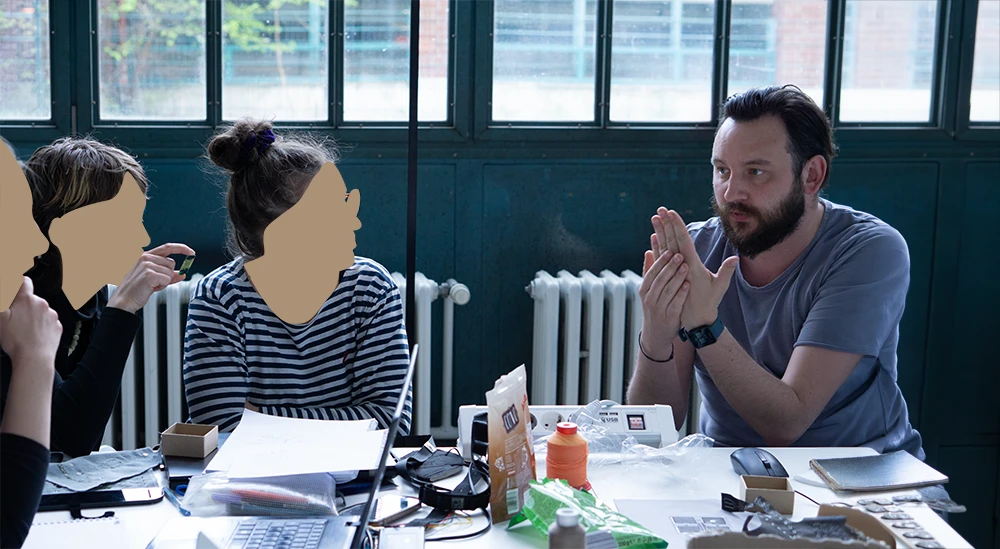
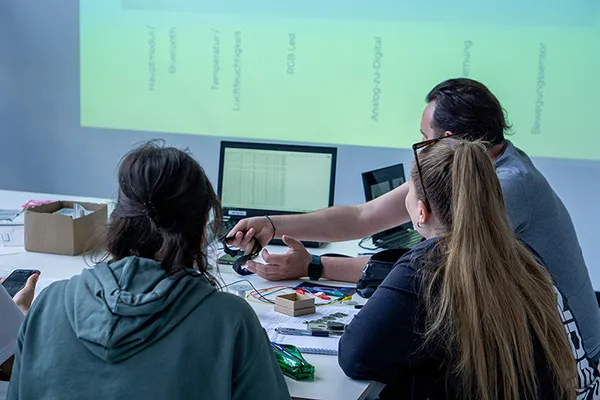
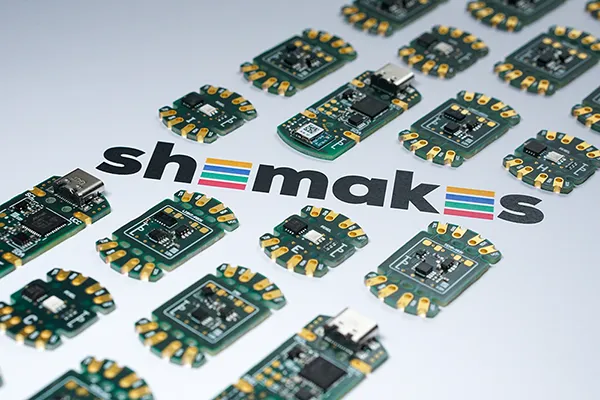
Shemakes ist eine europäische Initiative, die darauf abzielt, den Zugang zu Technologie und Elektronik für neue Zielgruppen zu öffnen – insbesondere für Menschen aus kreativen Disziplinen wie Mode, Textildesign oder Kunst.
In Workshops werden grundlegende elektronische Zusammenhänge verständlich vermittelt und direkt praktisch angewendet. Der Fokus liegt auf einem spielerischen Zugang: Teilnehmende bauen eigene Schaltungen, verstehen Sensorik und kombinieren elektronische Komponenten mit Textilien.
Ein besonderer Schwerpunkt liegt auf E-Textiles – der Verbindung von Stoffen und Elektronik zu interaktiven Materialien und tragbaren Systemen. So entsteht ein niedrigschwelliger Einstieg in Themen wie Wearables, Embedded Systems und physische Interaktion.
Meine Rolle: Konzeption und Durchführung von Workshops im Bereich Elektronik. Vermittlung grundlegender Prinzipien, Entwicklung von Hands-on Übungen sowie Begleitung der Teilnehmenden bei eigenen Projekten.
⚙ Einführung in Elektronik
✎ Hands-on Workshops & Vermittlung
◉ E-Textiles & Wearables
⍦ Lernen durch Prototyping
∿ Interdisziplinäre Lehre
✹ Zugang zu Technologie für kreative Disziplinen
Shemakes is a European initiative focused on making technology and electronics more accessible to new audiences — especially people coming from creative fields such as fashion, textile design or the arts.
Through hands-on workshops, participants are introduced to the fundamentals of electronics and apply them directly in practice. The focus is on playful exploration: building circuits, understanding sensors and combining electronics with textiles.
A key aspect is e-textiles — integrating electronics into fabrics to create interactive materials and wearable systems, providing an accessible entry point into wearables, embedded systems and physical interaction.
My role: Designing and leading workshops in electronics, teaching core principles and guiding participants through hands-on projects.
⚙ Introduction to electronics
✎ Hands-on workshops & teaching
◉ E-textiles & wearables
⍦ Learning through prototyping
∿ Interdisciplinary education
✹ Accessible technology for creative fields
E-MERGENCE – Pauline Stockmann E-MERGENCE – Pauline Stockmann Collaboration Fashion Hardware
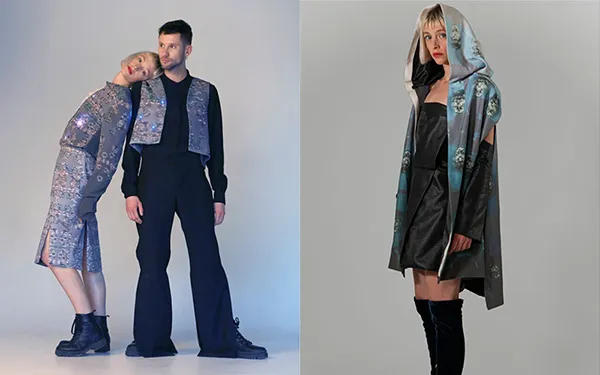
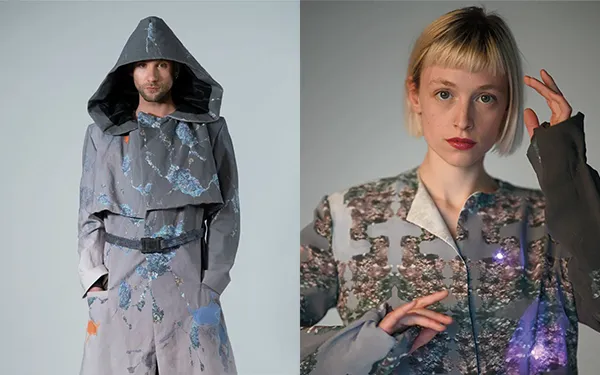
Im Rahmen der Arbeit E-MERGENCE von Pauline Stockmann habe ich die Entwicklung elektronischer Module für textile Anwendungen unterstützt, darunter Steuerungen für Heizdrähte sowie Infrarot-Kommunikation. Meine Rolle umfasste die technische Konzeption und Umsetzung eigenständiger Hardwarelösungen sowie die Integration dieser Systeme in den gestalterischen Prozess.
⚙ Hardwareentwicklung & Programmierung
◉ Heizdrahtsteuerung & IR-Kommunikation
∿ Integration in Fashion Design
In the project E-MERGENCE by Pauline Stockmann, I supported the development of electronic modules for textile applications, including control systems for heating wires and infrared communication. My role included the technical design and implementation of custom hardware solutions as well as their integration into the fashion design process.
⚙ Hardware development & programming
◉ Heating control & IR communication
∿ Integration into fashion design
E:Space – New Work E:Space – New Work Research E-Textiles Hardware
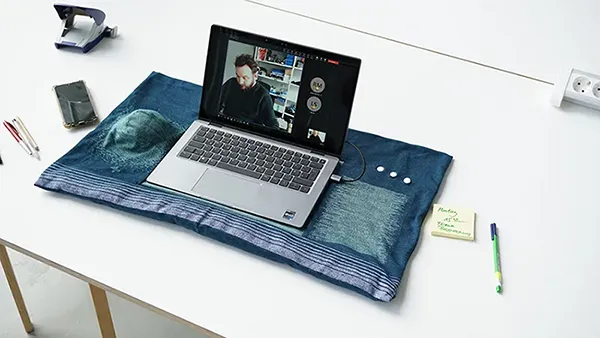
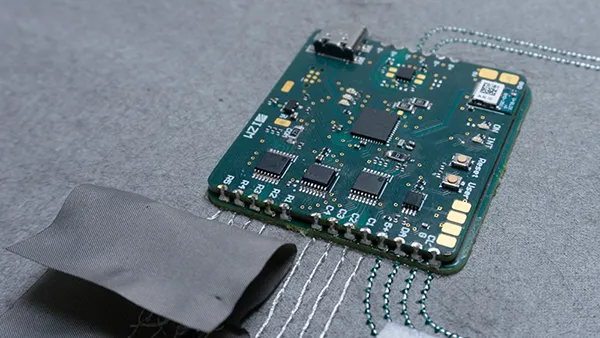
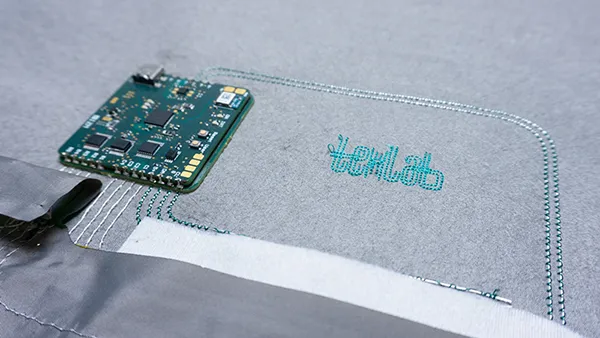
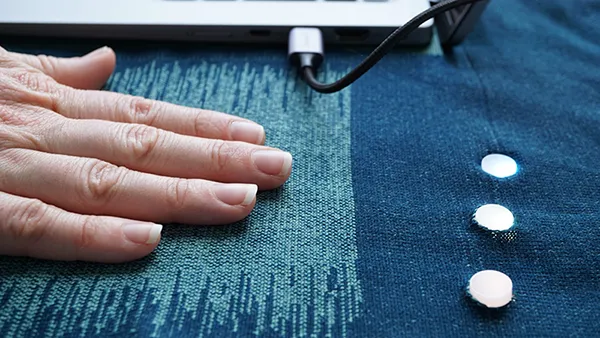
E:Space ist ein interdisziplinäres Forschungsprojekt am Fraunhofer IZM, das im Rahmen von Workshops die Zukunft von Arbeitswelten (New Work) untersucht und textile Interfaces mit integrierter Elektronik erforscht – in Kooperation mit der Kunsthochschule Berlin Weißensee (KHB) und im Kontext des Textile Prototyping Lab (TPL). Ich nahm am New Work Workshop teil und entwickelte Hardwarekomponenten für das Auslesen von Touch-Interfaces, die Aktivierung eines haptischen Elements (Stressball) sowie die Steuerung von Notification-LEDs.
⚙ Hardwareentwicklung
◉ Softwareentwicklung
∿ Auslesen von Touch-Sensorik
✹ Visualisierung von Touch-Interfaces (Processing)
E:Space is an interdisciplinary research project at Fraunhofer IZM exploring the future of work (New Work) through workshops and the development of textile interfaces with integrated electronics – in collaboration with the Berlin Weißensee School of Art (KHB) and in the context of the Textile Prototyping Lab (TPL). I participated in the New Work workshop and developed hardware components for reading touch interfaces, activating a haptic element (stress ball), and controlling notification LEDs.
⚙ Hardware development
◉ Software development
∿ Reading touch sensors
✹ Visualization of touch interfaces (Processing)
Second Skin (Re-Fream) Second Skin (Re-Fream) Collaboration Fashion Hardware
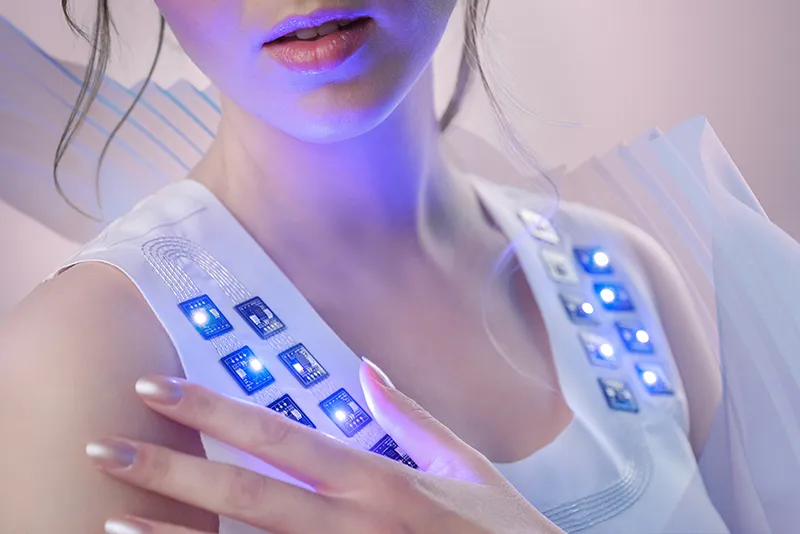
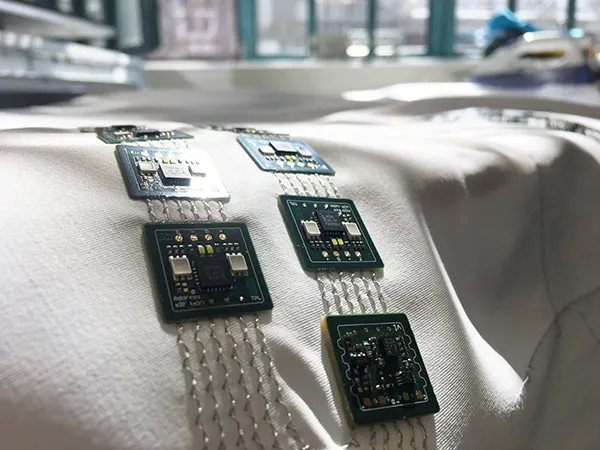
Second Skin (Re-Fream) ist ein interdisziplinäres Projekt an der Schnittstelle von Mode und Technologie, in dem textile Arbeiten gemeinsam mit der Fashion Designerin Malou Beemer entwickelt wurden. Meine Rolle lag in der Entwicklung von Hardware- und Softwarekomponenten sowie der Integration von Sensorik und Elektronik in textile Strukturen, wodurch ich eng mit dem Fashion Design Prozess zusammengearbeitet habe.
⚙ Hardware & Software Entwicklung
◉ Sensorik & Elektronikintegration
∿ Zusammenarbeit mit Fashion Design
Second Skin (Re-Fream) is an interdisciplinary project at the intersection of fashion and technology, developed in collaboration with fashion designer Malou Beemer. My role focused on hardware and software development as well as integrating sensing and electronics into textile structures, working closely with the fashion design process.
⚙ Hardware & software development
◉ Sensing & electronics integration
∿ Collaboration with fashion design
Tree Concert Tree Concert Installation Sensing System
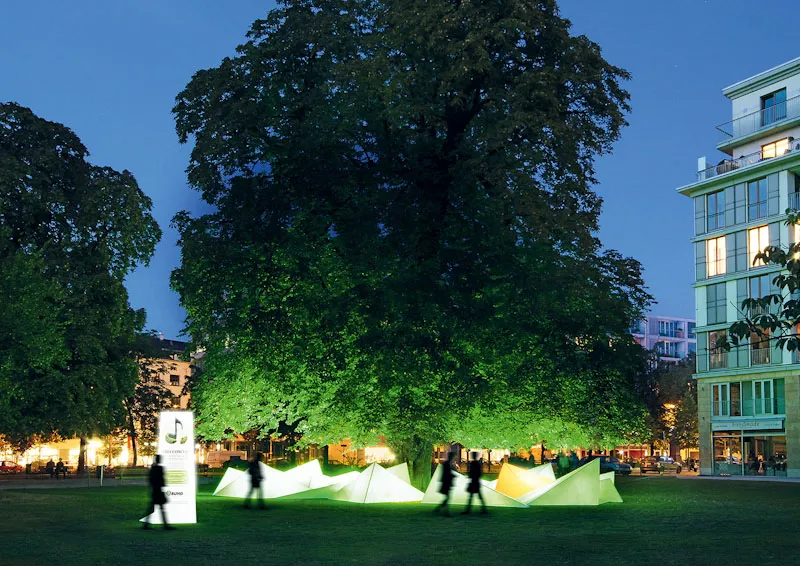
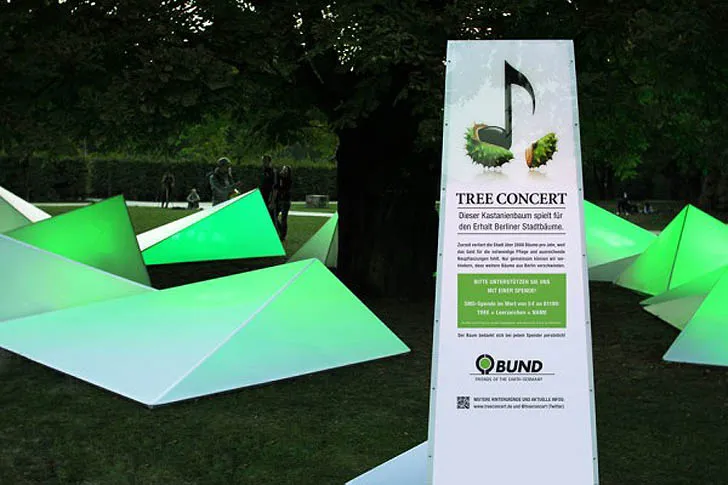
Tree Concert ist eine interaktive Klang- und Lichtinstallation im Monbijoupark in Berlin, realisiert im Künstlerkollektiv Gang of Berlin. Das Werk entstand im Rahmen einer Umweltkampagne des BUND und wurde mehrfach international ausgezeichnet.
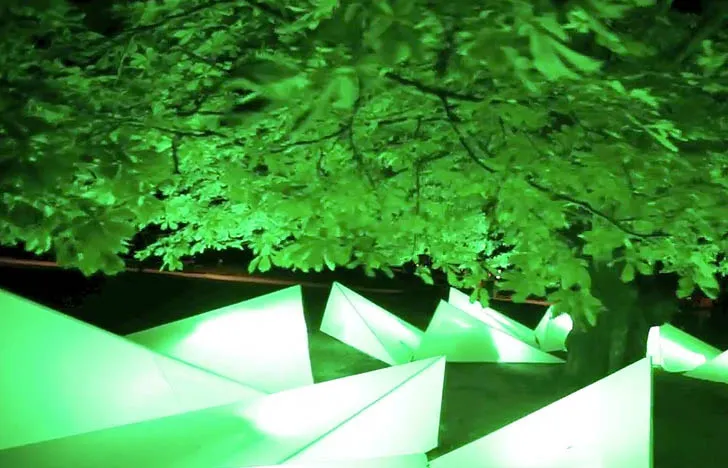
Die Installation nutzte maßgeschneiderte Sensorsysteme, die an großformatigen Klangmembranen befestigt waren. Herabfallende Kastanien lösten in Echtzeit audiovisuelle Impulse aus und übersetzten natürliche Prozesse in eine immersive öffentliche Performance.
Meine Rolle: Entwicklung des Sensorsystems sowie der gesamten Hard- und Softwarearchitektur: Sensorik, Schnittstellen für audiovisuelle Ereignisse und zuverlässiger Outdoor-Betrieb.
⚙ Eigene Sensorsysteme
◉ Schlagimpuls-Sensorik & Membranschnittstellen
⍦ CAN-Bus Datenfluss-Architektur
▣ Custom-Mikrocontroller-Design
∿ Echtzeit-Datenverarbeitung
✹ Audio- und Lichtsteuerung
✉ Online-SMS-Spendeninterface
Tree Concert is an interactive sound and light installation located in Monbijoupark, Berlin, created within the artist collective Gang of Berlin. Developed for an environmental campaign by BUND, the work received multiple international awards.
The installation used custom-built sensor systems attached to large sound membranes. Falling chestnuts triggered real-time audio-visual responses, turning natural processes into a public, immersive performance.
My role: Lead developer for the sensing hardware and the complete hardware–software architecture: sensor module design, audiovisual interface development, and reliable outdoor operation.
⚙ Custom sensing hardware
◉ Impact sensors & membrane interfaces
⍦ CAN-bus data flow architecture
▣ Custom microcontroller design
∿ Real-time data processing
✹ Audio & light control systems
✉ Online SMS donation interface